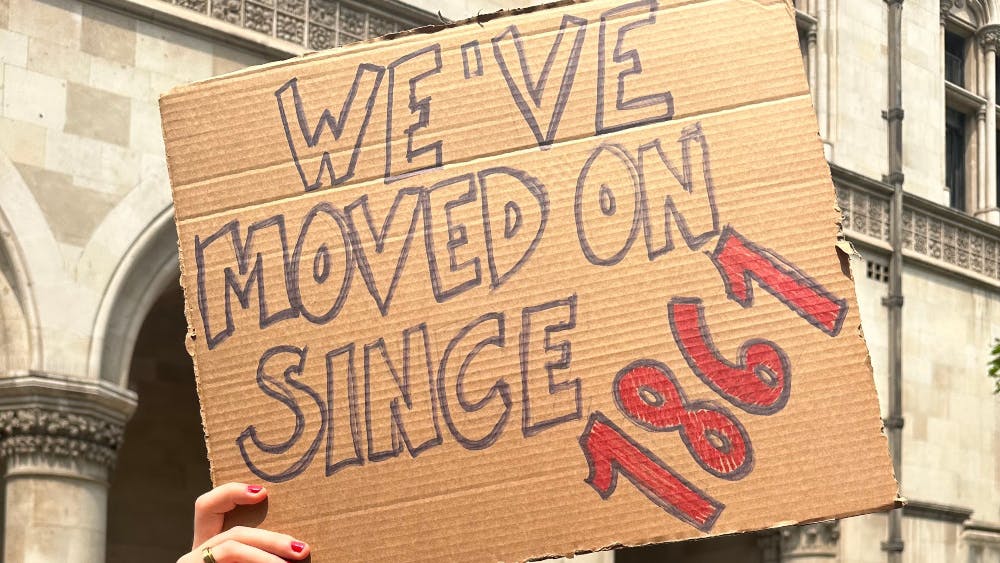
The Women’s Strike is an anticapitalist strike that, according to Ni Una Menos founder and strike organiser Cecilia Palmeiro, connects the dots between the most dramatic forms of femicide, rape and physical violence to capitalist exploitation. The Women’s Strike draws its power from the fact that it is women’s labour, the majority of it unpaid, that keeps the world turning. Childcare, reproductive and care work, emotional labour, is overwhelmingly done by women for free, and generally alongside wage labour. The strike demonstrates what happens when this labour is withdrawn, because when we stop, the world stops with us.
Whilst the Women’s Strike is widely understood as something in constant process and not limited to one day a year, today (March 8) will see coordinated strike actions take place across the world, including in the UK. The London action this year focuses on the clothing industry, highlighting the exploitation present at every step, from the harvesting of cotton right through to the low wage precarious sales jobs, and consumption driven by enforcing gendered insecurities, as well as the devastating environmental impact. It is framed as a consumption strike and will involve a mass clothes swap in central London. Eighty per cent of garment workers worldwide are women, and the majority of them work in sweatshops. They work long hours for outrageously low pay in dangerous conditions where sexual harassment is rife. This is a huge feminist issue. In early 2019, 50,000 garment workers went on strike in Bangladesh to demand higher wages - make no mistake, these women are fighting back. I recommend checking out NO SWEAT - which produces T-shirts for bands to print on and plough profits back into supporting striking sweatshop workers.