Features

“A tear ran down my cheek”: Nicko McBrain on Iron Maiden’s powerful new documentary Burning Ambition

This week, Iron Maiden release their eagerly-awaited, career-spanning film Burning Ambition. The project – directed by Malcolm Venville – marries interviews with astounding archival footage plus insight from Javier Bardem, Lars Ulrich, Chuck D and some of their most devoted fans. As legendary former drummer Nicko McBrain tells us, it’s quite the emotional rollercoaster…

“A tear ran down my cheek”: Nicko McBrain on Iron Maiden’s powerful new documentary Burning Ambition
Words:
George Garner
Photo:
John McMurtrie

Somewhere back in time – well, approximately five weeks ago – Iron Maiden legend Nicko McBrain went to his local cinema in Florida for a top-secret screening. So secret, in fact, even he – one of the stars of said film – had to surrender his phone at the door before he could watch it.

“But… do you not know who I am!?’” he grinned, handing it over.

At this recollection – and for neither the first nor the last time today – Nicko cracks up laughing as he begins his reflections on Burning Ambition, a triumphant new film that tells the Iron Maiden story from its humble East End beginnings to touring the globe in their own plane. There are mesmerising highs, moving lows, different line-ups and more incarnations of Eddie than you can count. It’s a lot to take in. Just ask Nicko…

“I was sitting there with me wife and I teared up, it was brilliant,” he tells K!. “The only thing I had a criticism with was when they changed from Clive Burr being on drums to myself they didn’t make a bigger deal about me – I want all the limelight!”

It’s hard to adequately express the cheekiness of his face as he says it, but this is Nicko in a nutshell. And quite frankly, it’s great to see him in this mood after all he’s been through.

It’s still less than two years since the drummer announced “with both sorrow and joy” that he would be stepping down from active duty with Iron Maiden after 42 years of loyal service, this coming on the back of him suffering a stroke in January 2023.

He’s in charismatic form as he fills K! in on everything from his dogs (“One’s a hooligan, the other’s really mellow”) to the weather (“You’ll be glad to know it’s pissing it down here!”). But top of the agenda is Maiden’s film. What it embodies. And what it means to him personally to watch his life up on screen. Oh, and revisit that time he appeared on The Sooty Show. The sense emanating from Nicko throughout is one of gratitude.

“I've always said: one man had a dream,” he says, praising Maiden founder Steve Harris’ vision. “In the early days it was four other guys living it with him, now it’s six. This story reflects the nurturing of this band from day one. It shows the hard work that Steve put in, it shows you the dynamic of ’Arry, of where he took the band with [Maiden management team] Rod Smallwood, Andy Taylor and Dave Shack, the wonderful crew and then Sanctuary Records and the house that Eddie built.”

With so much history to look back on, it’s time to pick the brain of McBrain…

First off, Nicko, what was the biggest surprise for you watching Burning Ambition?
“When you think about it, there’s 50 years of history to Iron Maiden. How do you tell that story in 90 minutes or so? That’s an awful lot to cram in, but I thought it was brilliant. I was overwhelmed by the whole thing, to be honest. There was a lot of information to absorb so I was like a sponge! But the one thing I took away is how wonderful it was to see the fans tell their stories about what we mean, and what we’ve meant, to them. And of course, we have the wonderful Javier Bardem – who’s a great mate of mine – and Lars Ulrich, Chuck D, Gene Simmons and so many other celebrities, too. But what impressed me the most was the interaction of the fans. There were a couple of moments when they were talking that I actually started to have a tear run down my cheek and my wife just looked at me and squeezed my hand.”

Javier Bardem and others are particularly eloquent at talking about how Maiden challenged their own worldview growing up. Was that eye-opening, even for you, to hear about?
“Absolutely. I was just doing some Comic Cons with Bruce and it was great because it gave me a chance to actually sit in front of fans telling their stories. For instance, there was one couple who came, and the guy was in the army and said, ‘You guys literally saved my life’ in terms of where he was in his own psychology. He didn’t go into too much detail but he served out in Iraq and I could tell there was a lot of stress. His wife turned around and said, ‘You don’t know how much your music, band and spirit has meant to my husband.’ It was like, 'Whoa...' That same feeling reflects throughout the film. There are even politicians and CEOs of companies that you would look at and go, ‘They don’t look like a Maiden fan’ but when they come to the show, they've got the leather jacket with patches all over it. But we’ve always told stories about all kinds of stuff but we’ve never preached. We just say, ‘What do you think of this?’ or ‘Is there life after death?’ We’re asking a question within the music.”

Onto a slightly less existential train of thought: were there any moments watching the film back where you were like, ‘What the hell was I thinking?’
“Well, yeah, my first [Iron Maiden] photoshoot with Ross Halfin in Jersey! I’d just had me haircut, so I’m standing on this rocky cliff with the rest of the band with me leather coat on and short hair. Everybody else had long locks! That was one of those things that made me go, ‘Oh my gosh, look how young I am!’”

How did it feel watching the part where you join Iron Maiden? Do those initial years in the group look like you recall?
“No! I'm going, ‘Did we do that?’ (laughs) I have very, very fond memories, but there’s a lot I’d forgotten about certain things we’ve done over the years. The trip to Poland [when Iron Maiden played behind the Iron Curtain], it’s just incredibly powerful, isn't it? There are so many stories from that tour, the Polish fans were so amazing, and they were repressed and still under the communist regime. But also, a friend of mine, Steve Gadd, was my drum roadie for 13 years. He was such a part of that trip to Poland, and it was lovely to see him in the film because we lost Steve back in 2013, he passed away. He was such a brother to me. Seeing him stirred up a lot of wonderful memories.”

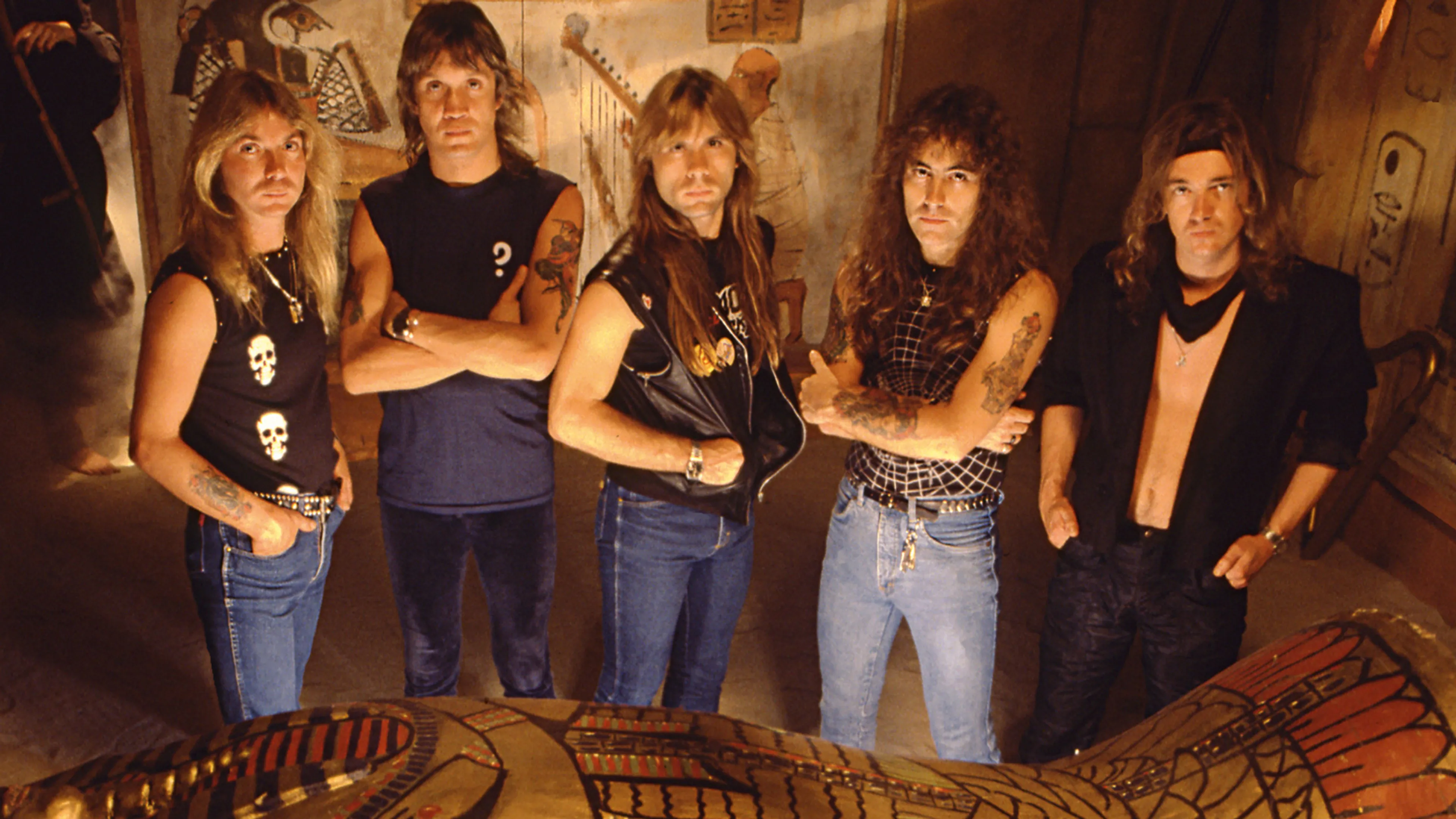
We’re used to witnessing the indefatigable Maiden touring machine, but it was really interesting seeing the behind the scenes of you all on the road in the ’80s, and with Bruce talking about that relentless five-year stretch of never stopping…
“The film has footage of a photoshoot that we did where we all looked absolutely burnt out…”

Exactly – how did you even physically get through that for five years straight?
“Well, you have to bear in mind this was 40-odd years ago, we were all young. Can I swear?”

Be our guest…
“Back then, you’re full of and piss and spunk. You’re gung-ho. You're going out playing three nights in a row. Sometimes four. Rod, bless his heart, his dream back in 1979 was making this band the biggest metal band in the world, which he achieved, hands-down. And so that’s the baggage that you take along with that dream, you do an album, go on tour, come off tour, have a couple of weeks off, do another record, and then go out on tour. Rinse and repeat. I don’t know how we got through it, but looking back at that particular part of the movie, you can see in the bus [footage] the fatigue we were feeling from the length of the tour, and the fact that every time Maiden hit the stage, even today, 110 per cent is given to the performance.
“The film’s amazing because it shows you, not the dark side, but the downside in that respect. We were definitely burnt out at the end of that Powerslave tour, and then we did the rinse and repeat and did Somewhere In Time, but Rod was right to do it. That was the way in those days if you were going to break the band and be successful. But the bus was brutal. It’s claustrophobic, and you’re all cooped up by the table. But it’s also weird because when you’re like that, you’re thinking, ‘Oh gosh, I'd give everything up to be at home with my feet up.’ But then when you’re home for two weeks you’re going, ‘I need to get on the road again!’”

The film also grapples with the ’90s in a very candid way, with Bruce leaving, Blaze Bayley stepping in, Maiden playing smaller venues, and fans talking about certain songs not working live anymore because of their vocal differences. So many bands would have quit at that point, but it paints such a strong picture of the determination you all had…
“For Blaze to replace Bruce was very difficult. Bruce was more soprano than baritone, which is what I think Blaze was, so there was an issue with the fans accepting him and we were playing the small theatres, and played some clubs in Florida. But here’s the thing: it never diminished the spirit of the band. Certain shows Blaze had a struggle with and fans kind of went, ‘Oh, this isn’t really Maiden at their finest,’ but we were still Maiden, we were just a different Maiden. The essence of the band hadn’t changed in the slightest.
“With Blaze, I loved that guy. I was a father figure to him, I said, ‘I’ll take you under my wing when we go out.’ We spent a lot of time together, and I loved him. At the end, I did have my trepidation, if you like, about some of the performances as we were going down the line into the Virtual XI tour, which is documented in the movie. But we never lost the essence of what Iron Maiden was, especially with Steve at the helm. Steve never wavered and was 125,000,000 per cent supportive of Blaze, as we all were. But then cracks started to appear. It was looking like, ‘We’ve got to either change this or we aren't going to survive.’ And then Bruce, obviously [returned] and we know the story of what happened.”

When Bruce returns in the film, you could have played it nice for the cameras, but you talk about how pissed-off you still were with him for leaving, and how you actually told him that during your first reunion meeting…
“I knew I had to say something to him, because it’s how I felt. I felt betrayed by him, halfway through the Fear Of The Dark tour, announcing that he was leaving. I thought, ‘I’m gonna have to put this to bed with him.’ You know there were doubts as to his motives of coming back. But then, after that first meeting in Brighton, it was done. We were in the pub and I put my arm around him and said, ‘Look, mate, it’s great, I’m glad you're back, but listen, I can't change the way I feel and what I said about that. I love you, but that’s how I feel.’ He just turned around and said, ‘I wouldn’t have it any other way, Nicko, I love you too.’ And that’s the last we ever – to this day – spoke about it.”

What does that say about you both, do you think?
“Well, it tells me the sincerity and the truth inside his heart. As I said, I needed to say that to Bruce because I wanted him to know everything wasn’t going to be, ‘Oh, yeah, you know what I said? Bollocks to that.’ It was something that was on my mind. I think it was all God's plan – not Rod’s plan, bless him – because who could have planned it other than God saying, ‘Right, you’re going to get a new singer, then you’re going to get the old one back, and he's going to bring Adrian [Smith] with him, and then you will make those records.’ We came out with Brave New World, which was the beginning of us going back into the mega stadium touring that put us back on the map. Bruce and Adrian coming back completed the band.”

Something that made a big impression was when you talk about your health issues and noticing your difficulty drumming on Somewhere In Time. There’s a lovely moment, which says so much about Steve and yourself, when he tells you to ‘Play it straight’ when you’re struggling. It’s really like Steve is a commander saying, ‘Leave no man behind’…
“That's absolutely right. I said to him, ‘I've been rehearsing the set and when I played that middle section of Somewhere In Time, before it goes into the solos, it was very messy.’ I remember we were standing in front of the drum set after we finished rehearsing, and the boys had gone out to make cups of tea. Steve, he's got his arms crossed, goes, ‘Well, why don’t you just play it straight?’ I said, ‘You're a genius! I’m the drummer, and I didn’t even think of that!’ The great thing about my brothers is that they all supported me, and they knew how I was struggling to play certain parts of certain drum fills that I had played for the last 42 years. Not for all of them, but the older stuff I changed to fit what I could actually do within my capability.
“But, you know, enough was enough as well. I was struggling physically to recover. I was okay with it for the early part, but in ’23 it started to be a chore. And I thought, ‘This isn't fair on everybody, I can’t play these songs properly.’ And I knew what was coming up with Murders In The Rue Morgue on the Run For Your Lives tour and I went, ‘Harry, I can't play that intro.’ The love he had in his heart for me… We both sat in LA and it was a very, very emotional moment, just me and him sat at a swimming pool at the hotel in Santa Monica. It was a very, very emotional time. I said to him, ‘Look, I think it’s time, I'm gonna have to step back,’ and he went, ‘Yeah, we’re all worried about your health, Nick.’ It hurt, after 42 years with these brothers, to know I couldn't do the actual Run For Your Lives tour for the 50th anniversary.”

But what you did get to do was go out on your own terms. It’s one thing to play your final gig with Maiden in the moment and presumably another to watch that moment – and what it means – in the cinema a few years on. How was it for you to relive it onscreen?
“Watching that was one of the other times that I had a tear in my eye. Seeing it again through the eyes of that camera and Malcolm’s wonderful direction of it and production of it as I went onstage, all the crew that could be onstage were all lined up. They showed the end of Wasted Years, and I thought, ‘There’s my last downbeat.’ Bam, that’s it. With that, I’m done. I remember they showed me when I was on the stage on my own, and I went down and bowed, and the people down the front were crying. I teared up and I thought, ‘Whatever you do, don't cry, be strong.’ Not that I don’t cry – if I see me two dogs sniffing each other's butts, I cry. I'm an emotional guy. But I thought, ‘No, be strong, go out with a fist-in-the-air vibe.’ That farewell was pretty tough, and that’s where I had another tear up in the theatre. They captured the essence of that last show really, really well.”

And since then, have you offered any advice to the new guy?
“Oh, funny you say that, we had lunch! Simon [Dawson] said, ‘God, your right foot, you play fast!’ I said, ‘Well, look, if you’re having a problem with it, use another pedal.’ He went, ‘I’ve got one on the kit, but I don’t really want to use it.’ I said, ‘Look, Simon, if you feel that you can’t do it with one, then do it with two – for crying out, no-one’s going to complain! They’re already moaning about your little baby kit anyway’ (laughs). So the two drummers of Iron Maiden had a good laugh. Simon’s a great player. He’s played with Steve for 14 years now [in British Lion], and he was the right choice to have as my replacement and I'm proud of the fact that he hasn’t tried to emulate my drum set in visual terms, he's keeping his own identity.”

Final question, Nicko, and perhaps the toughest one of all: upon reflection, what was the harder gig, drumming for Sooty or Maiden?
“Oh, definitely Sooty, mate. And there are two reasons. One, I had a terrible mullet. What possessed me? For crying out loud. I'll never forget the day I met [Sooty creator] Matthew Corbett, the first thing he said to me was, ‘What a bloody way of making a career, sticking your hand up the ass end of a puppet’ and I just laughed. I had to have a drum battle with Sooty and that was pretty nerve-wracking. But, the thing is, too, I took my boy, who was five, to the recording. They had these incredible toys, and my son’s there bashing cars, making all this noise when we’re trying to record my bits. So the director turns around like, ‘Nick, he’s making a terrible calamity, can you get him out of the studio, please?’ So I had to take my son out and he started crying. So, yeah, that was tough – it was like we got a red card!”

Check out more:

Now read these

The best of Kerrang! delivered straight to your inbox three times a week. What are you waiting for?