News

Slayer appear to be teasing a couple of U.S headline dates
Their touring calendar is looking quite quiet so far in 2026, but are Slayer about to announce new U.S. gigs in Los Angeles and Minnesota?!
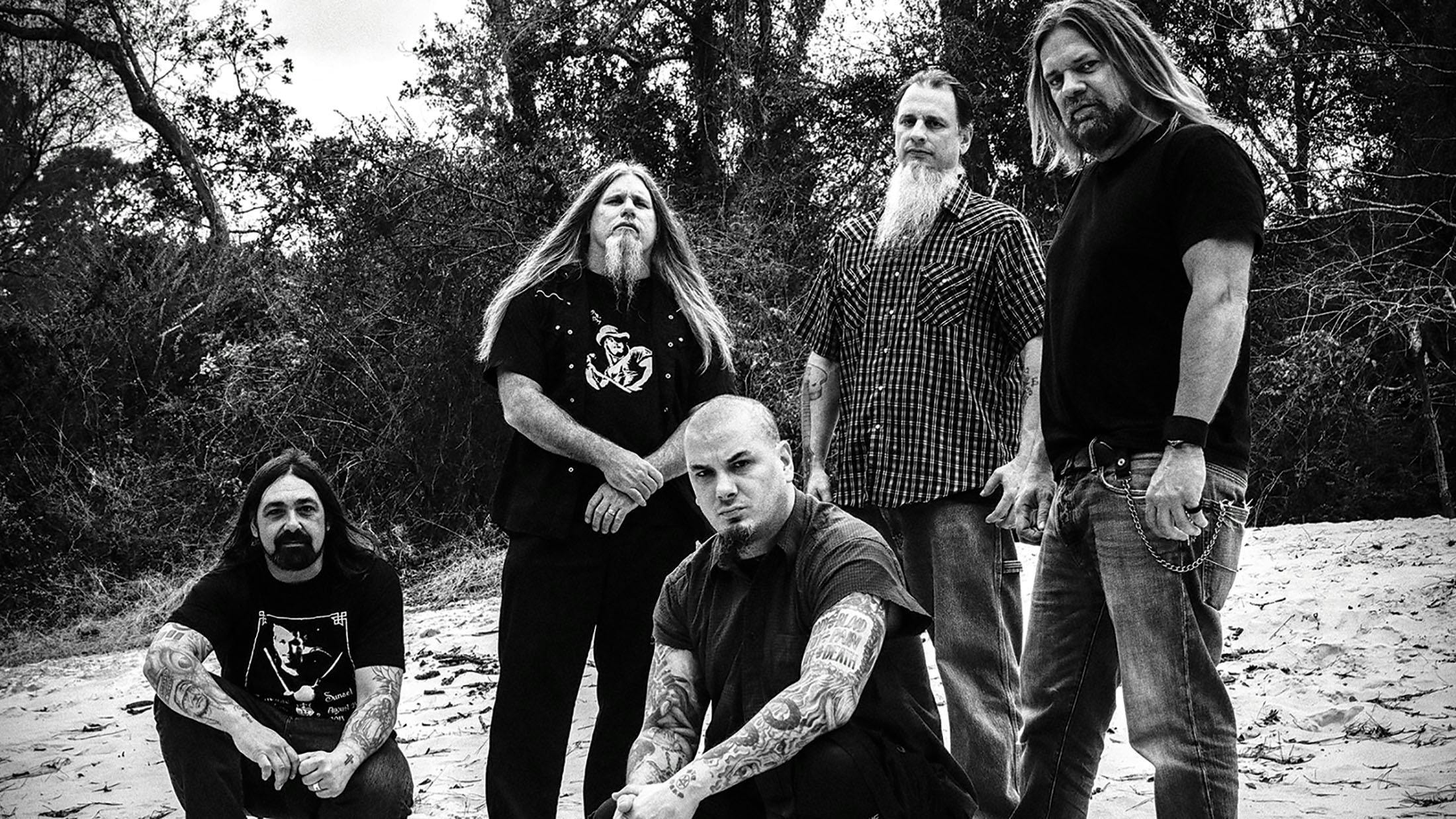
From growing up as a punk in New Orleans to counting James Hetfield and Tony Iommi as fans of his riffs, it’s been a hell of a ride for Pepper Keenan. And it hasn’t stopped. Corrosion Of Conformity just recorded their new album in a Bee Gee’s house. Here, he talks guitars, beers with Dio, and “the kind of bands you can grow old in…”
More than once while talking to Kerrang! in the basement of his house in New Orleans, Pepper Keenan picks up a guitar. He grabs one, custom-made for him as a gift from James Hetfield when Corrosion Of Conformity toured with Metallica in the ’90s, to show us his design touches on it in detail. The rest of the time, though, he just idly starts strumming as he talks, without thinking, as if his hands feel weird without one.
Shortly to turn 59 years young, Pepper has spent most of his life playing guitar. Growing up in NOLA, music wasn’t exactly hard to come by. In 1989, he joined Corrosion Of Conformity as guitarist, a band he’d already been a fan of for years as a teenage punk, and later graduated to vocal duties for 1994’s million-selling Deliverance, a record that found them easing into looser, more Sabbathy territory than their punk roots. In the mid-’90s, he took up the axe in supergroup Down. When Jason Newsted quit Metallica, Pepper was one of the first people asked to audition for the vacant bass spot.
Following the departure of bassist Mike Dean, and the sad death of drummer Reed Mullin in 2020, Pepper and fellow guitarist Woody Weatherman found themselves just the two of them, jamming guitar to write COC’s new album Good God / Baad Man, “Just like when we were back in the fuckin’ day.”
Nicknamed ‘Dark Side Of The Doom’, it’s a sprawling work that takes in every element of COC, not least Pepper’s inexhaustible skill with a riff, from crushing stoner to blissful psych jams. As an entry into their catalogue, it’s a good one. But as an illustration of the man himself, it’s even better. Not least in that, even though things and situations and personnel may change – indeed, Pepper was away from the band focusing on Down from 2006 to 2015 – there’s no end to it all. He is a lifer.
“It's like getting a new girlfriend or something,” he drawls of having to build a full band again, getting in bassist Bobby Landgraf and drummer Stanton Moore. “It was just me and Woody writing this thing. We didn't have Mike Dean. We lost Reed. But me and Woody had discussed it 100 times and said we weren't going to stop. We were, we were too amped, we were having too much fun with this band. The story wasn't over with COC.”
Indeed. Nor for Pepper Keenan. Whose own story is pretty full already…
The new album is a double, split into Good God and Baad Man. Where did that come from?
“Me and Woody were drinking beer, listening to records, jamming out, playing guitar in Mississippi at a place called The Black Shack. We started talking about how many different things COC has done stylistically, from something like [Southern rock track] Stare Too Long to fucking [aggressive banger] Vote With A Bullet. And we didn’t wanna make a record with 10 songs the fucking same, and we were talking about how we can get everything this band does into one album. That’s when the idea just came up. ‘Good God, bad man’ was something I'd say for a long time, and it means different things depending on how you punctuate it.
“We wrote it like that on purpose. It wasn't an afterthought. We already had the order of how it was going to go before we started tracking it. That makes a lot of sense to me. It's weird how some people make records and then they finish all these songs, and then they decide what order they're going to put them in at the end of it. You don't write a novel and decide what chapter goes where.”
You recorded at Middle Ear in Miami, which is owned by Barry Gibb from The Bee Gees, and where Sabbath did parts of Mob Rules. What was that like?
“It was like walking into The Brady Bunch’s house! Barry, the boss man, he was all over the damn place. He's as awesome as you'd think he would be. You look at footage of him back in the day and it's like, ‘Dude, save some pussy for the rest of us.’
“It was cool to play there. On the song Baad Man, I played Maurice Gibb’s Stratocaster that he used on fucking Jive Talking – wow, you know?! So the whole making of this record, shit was happening like that. There was a white Moog sitting in the studio, from the Bee Gees’ ’78 World Tour or some shit like that. We fired that thing up and wrote a whole part on it, because it was just too good to not do it.
“We were all in the room. No control room behind glass, it was a portable studio. You couldn’t hear a track until you stopped playing. We were grabbing mattresses out of the house to separate the amps and shit. Guitars were bleeding everywhere, it was fucking real. Me and Woody had hit a block with the Pro-Tools and – no offence – the Kemper amps and the perfect recording shit. That's not even remotely where our heads are at. I think it's a breath of fresh air compared to what's going on nowadays. We weren't sitting in a fucking chair with fucking slippers on, or in a control room playing guitar in our pyjamas.”
Let’s talk about how you got here. What was it that first drew you in to music?
“It was probably two things. One of them was Ramones. Then a friend's older brother gave me an Elton John cassette for [1973 album] Goodbye Yellow Brick Road. I had those on tape, and I wore them out.”
What was young Pepper like?
“I was kind of a punk rock kid. I was a city kid in New Orleans. I got turned on Slayer and shit before I really even dug into the Black Sabbath stuff. A friend of mine went to rehab, and he came out worse than when he went in, and he was smoking cigarettes, and he turned me on to Black Sabbath when I was 13 years old. But then it was all guns blazing once I got a grip on all that stuff. I was the kid in ripped-up blue jeans, fucking shitty Vans, skateboarding down the street listening to fuckin’ Kill ’Em All.
“I was going to see Black Flag, Circle Jerks, Bad Brains, actually COC as well. There was a punk rock club down the street, so I’d just sneak out of my house at night and walk four blocks to see that shit. And at the same time, there were older stoner dudes in the neighbourhood with fucking shitty moustaches and shit that were listening to Robin Trower and stuff. And I got into all that shit, too.”
When did you get your first guitar?
“I started playing around 14. I had a friend named Pat The Rat. He was a fucking complete red-haired hooligan. He got killed on a motorcycle trying to outrun the police on his shitty dirt bike. He went over this thing on the levee by the Mississippi River, and there was a cable going across it, and he didn't see the cable, and went straight through it. Anyway, he played guitar, and after his funeral and all that kind of stuff, me and my buddy snuck into his house and took the guitar. I’m sure his mother wasn't going to do anything with it, and I'm sure Pat The Rat would have wanted us to have it.”
As a New Orleans boy, was music just inescapable?
“Oh yeah. It's everywhere. Where I live, there's fucking a killer music clubs three blocks away, you know? New Orleans is a weird place where in high school it's cooler to be in the band than it would be to be on the football team. And as a kid growing up, you’ve got your little punk rock guitar and shit, and some brother down the street who plays guitar better than anybody you've ever seen starts playing and just chops you down like a fucking banana tree. You're humbled constantly here. These motherfuckers are not rich, they're not famous, but they will fucking eat you for fucking lunch. Same in Mississippi. When you grow up in that world, you get humbled quick.”
How did you go from being a fan of COC to being in the band?
“[1985 second album] Animosity was one of the most amazing records I'd ever heard. It still is. That was the game-changer that bridged punk rock and metal better than any other band I'd heard. I was in a band called Graveyard Rodeo, who were a cool band in New Orleans, we had a little scene going and shit. Super-DIY punk rock shit. And then the COC thing came up and somebody suggested I auditioned for that. The rest is kind of history.”
That was at the beginning of the rise of COC. What was it like as a young kid being in a band that was going places?
“It was great to be in a band. I worked at a skateboard shop. The owner was super-cool. I could go on tour. We had a practice place 24 hours a day. I could just sit there and focus on playing guitar. Reed was playing drums 24 hours a day. We were listening to shit, and everybody was in it 24 hours a day. Corrosion Of Conformity was a fucking band, and we all just played till our fucking hands fell off. It was awesome. I was playing guitar with Reed Mullin, the baddest drummer that I knew, and we were fucking banging heads every fucking day just going at it. It was awesome.”
The Sabbathy southern rock stuff started to come in with 1994’s Deliverance album. How did that go down with your peers?
“We had watched so many other bands who were preaching to the converted. That wasn't very punk rock to us. The big moment was when we came up with [Deliverance lead single] Albatross, and that had a lot of people from the old scene kind of giving us the fucking stink eye. They thought it was selling out, but to me, that was the most punk rock thing we ever did. We made a clear statement, like, ‘Later!’
“But we took all the shit with us. We were still dirtbags, punks, metalheads or whatever. We didn't need to skank around and run in a fucking circle anymore, but the energy was there, and it was very exciting time. The Deliverance record was part of that. It was being done on an independent label, which then got bought by Columbia. So suddenly we're in fucking Madison Avenue on the 50th floor of a building, an ivory tower, going, ‘What the fuck?’ They said, ‘Go finish the record. Where do you want to go?’ And we said Electric Lady, Hendrix’s studio. And they put us there for two months! A couple of months earlier, we’d been in Queens sleeping on the floor of a studio, suddenly we’re there, and the lady who ran it, Mary, was bringing me out the amp Hendrix used on If 6 Was 9 to do a solo on!”
After that you did 1996 album Wiseblood, and went on the road with Metallica for the next couple of years. How did you meet them?
“I can't remember the exact timeline, but Metallica was having a party in New York City because they had sold, like, 10 million records for The Black Album. Anyway, Reed Mullin knew some chick who knew somebody who got me and Reed in. At one point, I'm at the bar, and Hetfield walks up to me and Reed out of the fucking blue and goes, ‘Man, you guys made a really good fucking record.’ I was like, ‘Damn.’ I told James to his face, ‘Man, we weren't trying to be you. We were honestly just trying to write a record that you would think was cool.’ And he got it right off the bat.
“A couple of years later, they did Donington, and picked us to open the thing, which was super-cool. And then they did a secret show in London and wanted us to open, which was insane. Then we did the Wiseblood album, and they invited us to do the world tour. We were out for three years, and all those moments were fucking spectacular. It was fun as shit.
“One of my guitars, Hetfield had it made for me on that tour, because we had such shitty guitars. He was like, ‘Man, these guitars ain't gonna make it on this kind of touring. They are not staying in tune.’ So he set us up, and we sent our favourite guitars to Japan, our Gibson SGs, and they made copies of them. Wow. They made three copies so we could do that three-year tour. That was all Hetfield. And we still play these things to this day. Woody still plays his every fucking show.”
You got invited to audition for the Metallica bass job after Jason Newsted quit. How was that?
“It was intense. I’d played with those guys before, I’d done backing vocals on their cover of Tuesday’s Gone by Skynyrd. But this was crazy. I remember Hetfield calling me one day about that, saying he wanted somebody who wasn’t necessarily the best player – but it really was that! Even at the time, I was looking at Metallica from a fan's point of view, what I would want Metallica to do? First things first, I would’ve brought back the OG logo, got back in that world and started on some Master Of Puppets shit! Get back in the garage. I remember going in, we rehearsed, and it was killer. But then [Robert] Trujillo came in and I went, ‘Ohhhh shit. Damn…’ It all worked out for a reason. It's all good. It was super-fun.”
You were pretty busy at that point, with Down and COC both really active at the same time…
“Yeah. The weird thing about that is that in the ’90s, Deliverance and [Down debut] NOLA came out in the same fucking year, and now I'm in the same position again, because the new Down record’s done. They're mixing it right now. So, if it's anything like the last rounds, we'll be in good shape.”
Down toured with Heaven & Hell. How did it feel to have Tony Iommi saying he liked your riffs?
“That whole thing was super-intense, the whole deal. It was extraordinary to open up for them. I mean, just watching those motherfuckers soundcheck would bring you to your knees. We’d be in a fucking arena in Australia or somewhere, just me and [Down drummer] Jimmy Bower on the barricade, watching them soundcheck. That was mind-melting. Just being around them was insane. I got to play Iommi’s guitar through his rig one day at soundcheck! And we'd see Dio at the airport bar before the flight, and we’d just go sit with him, knocking them back, talking about wizards and dragons. He was a killer dude. Dio was the man, hands-down. Watching that dude singing… just the best, man.”
Outside your own bands, you own a bar, correct?
“Yep. Le Bon Temps Roule. It's a music joint. I'll tell you a really fucked-up story. We have a band that plays every Thursday night, The Soul Rebels. Brass band. One dude plays a kick drum upright, and the rest of them are stacking horns, shitloads of them. They play around the world, but our bar is their home base. They got keys to come in and jam.
“One day I came in there, and they were rehearsing during the day, and they were playing Metallica songs, I like, ‘What the fuck is going on here?’ A while later, I flew out to the Fillmore in California for Metallica’s 30th anniversary, to play Tuesday’s Gone with them and [Skynyrd guitarist] Gary Rossington. I get there, I come into the fucking hotel lobby, and The Soul Rebels, my fucking house band, are stood there. Fuckin’ Hetfield had seen them on the Jools Holland show in England and decided he wanted them between bands at this show. He didn’t even know that I know the guys!”
You’ve been in COC for almost 40 years, and even that’s been interrupted a bit. At this point, is it one of those bands like Hawkwind where it’s bigger than who’s in it?
“Me and Woody discussed that over beers a bunch of times when we were making this record. Sometimes I think it's almost more than a band. It's almost like a train of thought at this point, or an attitude. It's bigger than the sum of its parts. I think Corrosion Of Conformity as a thing has a life of its own. It's just an attitude, really. That's kind of the way we look at it.”
What keeps you doing this? As you say, you’re staring at two new albums between two bands over the next year or so…
“The main thing is creativity. I like making shit. I like doing stuff like that. I like challenging myself. It's not for a paycheck. I make money six different ways. I don't care about that. What I like is that it’s cool and a challenge to create, to make something like this record out of thin air, with no reference point, no anything. That thing came out of me and Woody's fucking brain, that's it.
“And I just like playing music. It never got boring to me. There were moments where, if you don't keep your head on straight, it can turn into a job. Or you start bitching about it. But you really better start thinking about what you're bitching about, you know? I don’t take any of it for granted, man.”
Is the kind of music both COC and Down play something that goes well with age? You’re about to celebrate your 59th birthday – are you glad you’ve got a catalogue with a lot of Sabbathy stuff in it, rather than having to play punk?
“That was something we said way back in the day, when Down were making the NOLA record. ‘This is cool, man. This is a band we could get old in. We can't be beating our heads against the fucking stage when we're 60.’ Guess what? Here we are…”
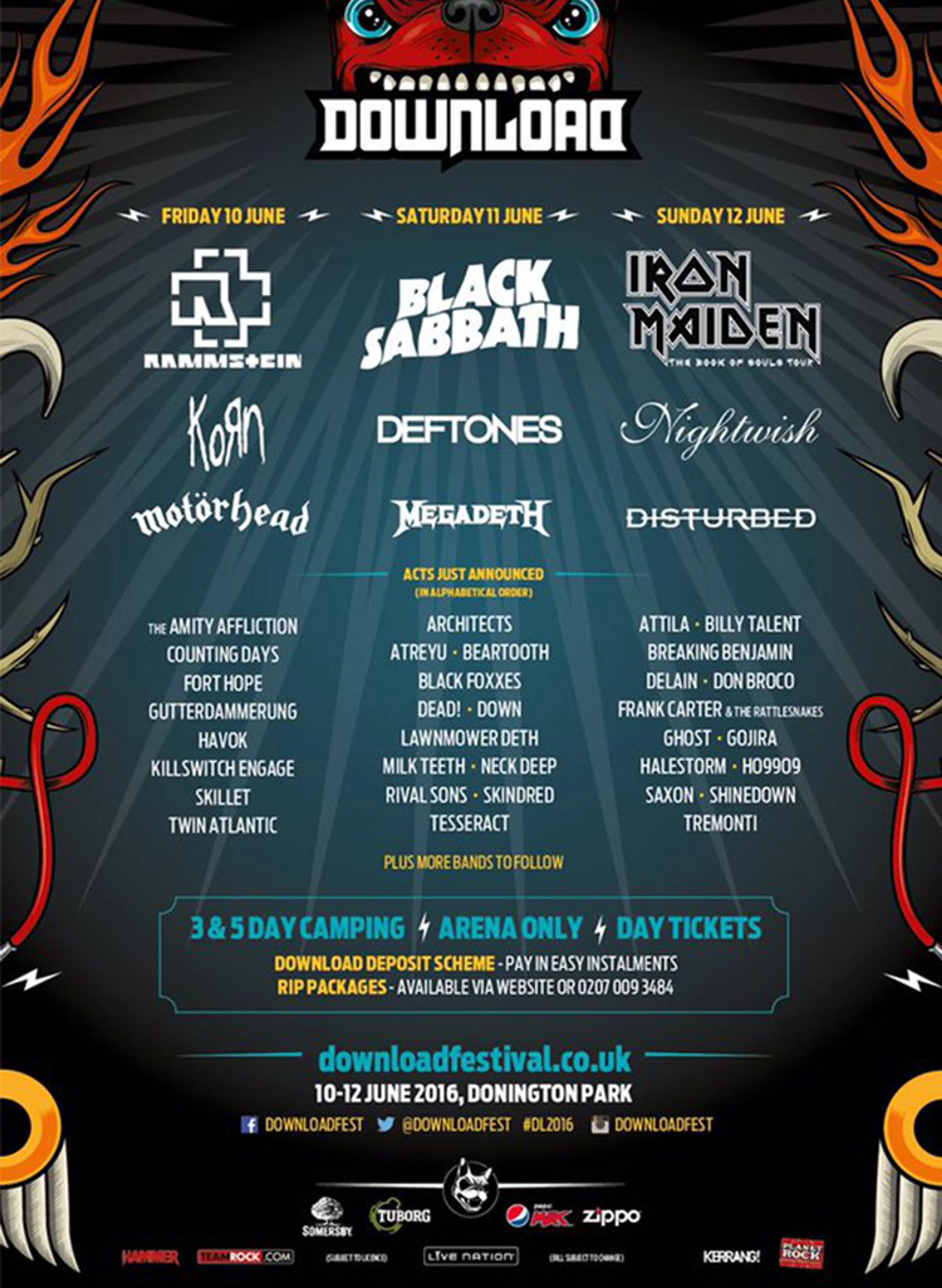
Good God / Baad Man is released on April 3 via Nuclear Blast. Corrosion Of Conformity play Download Festival on Friday, June 12 – get your tickets now.
Read this next: