News

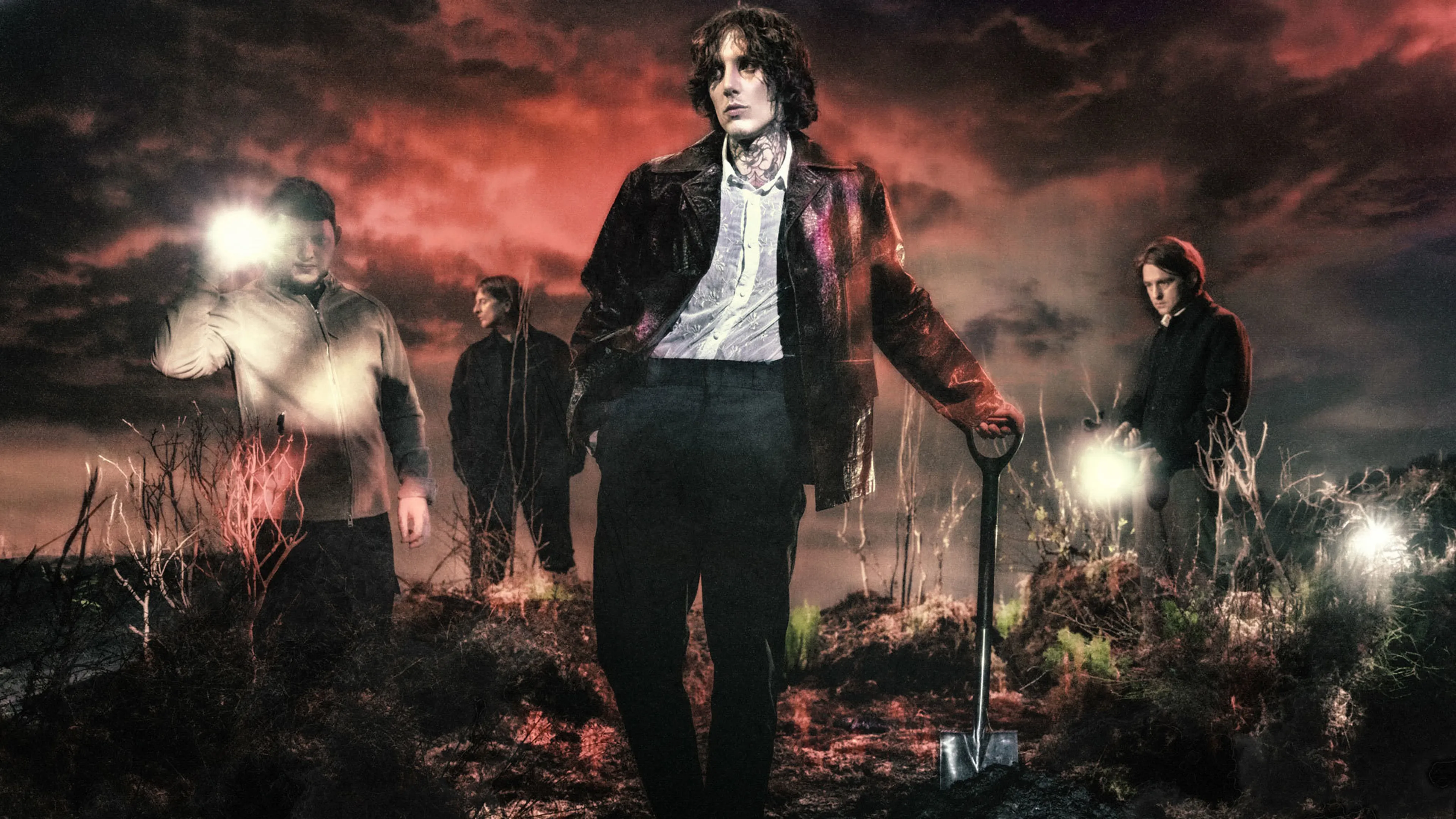
Bring Me The Horizon announce The Third Ascension Program North American tour
Once again joined by Motionless In White and The Plot In You, Bring Me The Horizon will return to North America in the autumn.
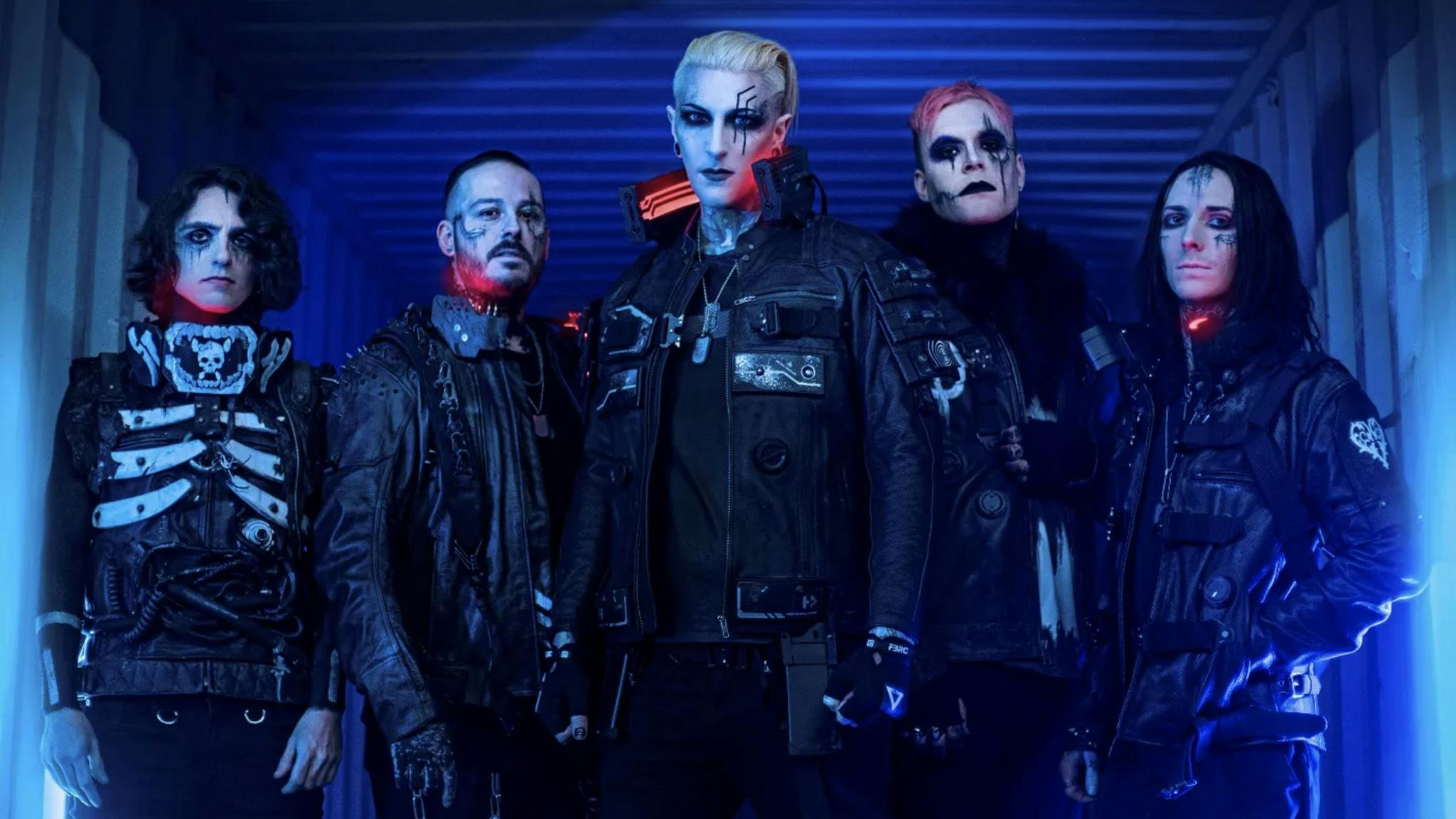
In the four years since Scoring The End Of The World, Motionless In White have skyrocketed to the top of the metal mountain, and now command arenas on both sides of the pond. It’s not been an easy ride – in fact, it’s taken 20 years to get to this point – but as Chris Motionless reveals in this world-exclusive interview, he wouldn’t have it any other way…
“Time is a cruel thing to a lot of people,” muses Chris Motionless, glancing into the distance.
It’s a curious thesis from a man in a band who time has actually been quite generous to. Some bands might waver after two decades and six albums, but Motionless In White have soared, ever since 2022’s sixth album Scoring The End Of The World catapulted them to levels of adoration and success beyond anything they’d experienced before. The spoils included headlining turns first at London’s O2 Academy Brixton and then Alexandra Palace almost exactly a year later, as well as a massive show at the famed Madison Square Garden in New York.
So Motionless have arrived at their 20th anniversary practically in the best position possible, but the road here was not paved with glory. As Chris sings in recent single Afraid Of The Dark – in which he plunges to emotional depths he’s never touched before – ‘I've given my life / I suffered and sacrificed to find / That fear is only fatal ’til it's alchemised… I’ve turned my struggles into strength.’
When such a significant amount of time has passed, it’s hard to feel immune to its effects, good or bad. It’s bound to prompt reflection. And, for Chris, peering into the rearview provided the inspiration for Motionless In White’s new album, Decades.
“The album is predominantly themed around us being a band for 20 years and the different things that we’ve endured, whether that be personal or collectively, and then things that we’ve observed in our in our lives,” says Chris, meeting us in a quiet corner of the Centre Bell in Montreal, where MIW are opening for Bring Me The Horizon, bleary-eyed as he admits he’s still re-adjusting to the rhythm of touring life again.
“This record is based on the mental perseverance and emotional perseverance, which is really, really trying at times. Trying to do so many things that once, you’re creating things, and you're subjecting yourself to all kinds of criticism and hatred and negativity. Even just existing outside of being in a band, the world is a very cruel place. There’s this all-encompassing feeling of defeating negativity, defeating time and expressing what it's been like internally, mentally and emotionally.”
“This record is based on mental and emotional perseverance”
Following a flurry of bucket-list moments, the Scranton goth-metallers are crossing off another one with their new single Playing God, collaborating with a personal hero in the form of Corey Taylor. Any seasoned Motionless fan will know that they would not be the band they are today if it wasn’t for Slipknot's violent, confrontational influence, and Chris thought there was no greater opportunity to try and make his dream a reality.
“I reached out and tried to be very upfront and honest about it,” recalls Chris. “He ended up being very cool and very excited about it. I wish I had a camera to capture my reaction when I heard it for the first time. He went so hard, and it's just so, so aggressive. I can't believe that's our voices next to each other.
“He’s an exemplary role model that any band member should look up to, as to how you want to conduct yourself in that type of setting, and then also as a human being. I’m so grateful to get the chance to work with him and admire him for that.”
While Afraid Of The Dark was the natural lead single that represents what Chris deems the “emotional backbone” of Decades, Playing God is a far fierier counterpart, placing in its crosshairs the ever-worsening toxicity of the internet.
“You open up any social media platform and you're just berated with rage bait, hot takes, engagement farming, mostly people just straight-up lying about shit,” Chris says, becoming more animated with frustration as he speaks. “It pushed me away from social media. I don't enjoy it. I don't want to be on there.
“The amount of stuff that the internet says about all of those things I discussed – artists, entertainers of any type – is so, so disheartening to me, and I'm so angry about it, even though I know I shouldn't be. I wanted to write a song that I felt was a raw expression of that emotion, to be like, ‘Fuck, fuck, fuck, fuck all of the bottom-feeding rats of social media that have no identity themselves, they have nothing to offer the world, and so their default is to utilise bands, artists, entertainers, whoever, to just bolster their own fucking social currency.’”
Collaborations are nothing new for Motionless. In fact, perhaps the primary catalyst for their star rising was a feature from Knocked Loose’s Bryan Garris in the form of the bristling, brilliant Slaughterhouse on Scoring The End Of The World. Decades is taking that mantle and running with it, but with a more varied list of co-conspirators than ever, namely pop singer Skylar Grey on R.I.P. and two newer names closer to their home turf in the form of Dark Divine’s Anthony Martinez and Joey Arena. In a way, Chris has learned from Corey’s influence.
“Corey and Slipknot have a great reputation for being a band that has constantly wanted to uplift younger bands,” he explains. “That's so inspiring to me, because I don't ever want to be the bitter old guy who won't help lift up people that might be inspired by us. If I like something, I want to support it. I want to be there helping younger bands find a place. And so that's really cool.
“It’s not like this whole big charitable act,” he continues. “That's not what it's about. Dark Divine very closely collaborated on the song; it was written together. It was a collaborative event, and that's really cool, same as the other song with Joey.”
As well as acknowledging his peers, there's a moment on Afraid Of The Dark where it feels like Chris is looking towards Motionless In White's fans and thanking them, hand on heart, 'I know I don't have to do this alone… When life drained the light from my heart / You pulled me from the dark.' After all, the band couldn't have crossed the two-decade mark without their devotion. They have shared something. That gratitude, and that shared history, has bled into the album more broadly as well.
“It covers a lot of different ground on what people can experience in many years of their lives, and I feel like fans are really going to connect to that, because they're going to see a lot of their lives in there as well," Chris says. “We're out here together doing it. We've all grown in different ways, with each other, away from each other. It's cool to have everybody's collective experience captured in an album.”
In music, there’s an argument that the slow burn is underrated. Chances are, most artists would choose longevity at a sustainable level over a rapid ascent than fizzling out like a firework. In a world of instant gratification and chasing viral moments, it can seem that the only way is to blow up fast or never be seen, but sometimes fortune favours the bands who cultivate loyalty and road experience at a more enduring pace.
Motionless In White can count themselves as one of those bands. They never shot to the top as quickly as, say, peers like Black Veil Brides, but could be always counted on for knowing themselves, connecting deeply with their notoriously faithful fanbase, and in particular, starting the party live.
Because of that, their sudden surge in popularity never registered as such.
“We haven't had a moment ever in our career where things went from zero to 60 so fast,” explains Chris. “I'm grateful for that. I've said so many times that I love the slow grind and the feeling of truly having earned it. It's very rare that a band that [blows up quickly] can sustain it for very long. There are other bands that have been working really hard for a really long time who then are given their moment, and that's awesome too.
“I want to feel continuously that we are growing,” he continues. “We are doing things that give us the ability to put on the bigger show, the bigger-budget music videos, because they help [realise] the creative passion. But I mean, hey, if people want to help one of the songs in this album blow up, I won't be mad about it!”
It speaks to the strength of a band’s appeal when they can withstand the changing trends. If anything, the conditions have shifted in MIW’s favour. There’s certainly less they’re having to battle against nowadays, particularly where their theatrical, blood-splattered image is concerned.
“It’s funny how many things we’ve survived through,” chuckles Chris. “I always laugh, Christian metalcore was a gigantic thing that was a tidal wave we were constantly fighting against. If you weren't a Christian metalcore band, you were like the Antichrist. Us being a band that very, very heavily leaned into being the Antichrist of all of that, it's cool that we survived that and lived on past that. We have a pretty distinct survival instinct to us and I’m proud of that.”
Neither are they the only ones experiencing such a huge uplift. In case you hadn’t noticed, metalcore is skirting the mainstream more closely than it perhaps ever has. Many of Motionless’ peers are becoming arena mainstays – Spiritbox, Ice Nine Kills, Bad Omens to name but a few – and the common thread between them all is that none of them blew up instantly. In the case of the former’s Courtney LaPlante and Mike Stringer, it took the dissolution of one project and the birth of another to get them to such heights.
“What I witnessed when all the bands like Korn, Limp Bizkit and Slipknot were blowing up, that was the last time I felt something like what's happening now,” Chris reflects. “Maybe I'm forgetting something, but until right now, in the last couple of years, I don't feel like that has happened. It's cool to see it twice, and now actually be inside of it this time.”
“Some people are upset because they feel ownership of this space and music, and that’s bullsh*t to me”
Naturally, when there’s a collective success, Chris celebrates it. He’s the last person who wants to see the floodgates close, least of all because they’re playing to newcomers all the time. In his mind, everyone’s invited to wave their freak flags with Motionless.
“Some people are upset about that, because they feel ownership of this space and music, and that's bullshit to me. I want everybody to be able to enjoy music, and whether you like two of the bands or 200 of the bands in the space, it's awesome that the two bands that they might like are getting that attention. I don't think that there are any rules. I just want everybody to listen to what they want and enjoy it and find something that they connect with.”
Do you want to be the biggest band in the world? Could you be the biggest band in the world?
“More of my dreams have been accomplished than they haven't in my career. If it ended today, of course, I'd be happy and satisfied. But what keeps me going isn't so much about the quest to fulfil more dreams and check more boxes. It's about that internal fire and that drive and hunger to create. It’s my primary way to express my feelings on things, and I'm so grateful that I have that, because I don't really foresee that ending.
“If the day came where we can't physically tour anymore, which thankfully, we probably still have a while before that happens, then I know that I'll still at least want to create music and keep things going. That’s a cool thing to think about.”
At the top of our conversation, Chris talked about the idea of getting one over on old Father Time. And before long, the topic comes back again.
“I really am motivated by the personal conquest of defeating time,” Chris explains. “Time is often our greatest adversary. While it hasn't been kind to me or us, it's fun that, within the time that we do have, we're making the most out of it.”
After all, no amount of success can dull the dread that comes with watching sand falling through the hourglass. The passing of time is as natural as it is scary, especially as the years continue to fall away. It’s a state of eternal forward motion that only stops with death. No wonder it can feel like an enemy.
“I can't remember what it was, but we were just talking about something that had happened, and it occurred to me that it was six years ago,” Chris says when asked why the passing of time weighs on him so heavily. “More or less we are doing the same thing year after year. We tour, we create a record, we tour, we create a record. It is the same function, the same cycle, over and over and over. You get lost in that, and it all blurs together. Thankfully there's pictures and documented footage of things that help you go back and reestablish your footing and where you're actually at in time. But sometimes it's pretty disheartening to be like, ‘Whoa, that was six years ago.’”
Chris is prone to getting lost in time. He’ll immerse himself so deeply in something, and become so intensely focused – usually on creating – that he enters a state where he can no longer see the forest for the trees. Time’s flying and he doesn’t stop to notice it, or anything else that might have fallen by the wayside while he was lost in focus.
“It's a struggle. I get wrapped up, I get super-motivated, the energy starts going on one thing, and then you look back and three months has gone by, and you're like, ‘Where did this time go? What have I left in the wake of this creative bender?’” he explains. “It's tough to manage, but I have done better.”
The turning point, he says, was the pandemic.
“Being forced to step back and not do what I was so used to doing was a wild mental experience for me. I realised how codependent on it I was. I realised it should not be my sole purpose in life and it made me rearrange my priorities, how I approach friendships, relationships, personal time, mental health, all these different things.
“I love feeling passionate, but I want to also live the life I'm working so hard to have. I don't want to look back and be like, ‘Where did this go? Why didn't I take advantage of it?’”
“I love feeling passionate, but I want to also live the life I’m working so hard to have”
Time is an exposing thing, but it can also be a great healer. It brings personal growth, too.
When we ask Chris how he feels he’s changed over the two decades that Motionless In White have been a band, he points to “the way I exercise, the way I write songs from experience,” and the grace with which he tries to handle his mistakes. He's even quicker to point out what hasn’t changed, like his motivations and his core values. Nor has there been any shift in the self-confidence that he believes has propelled Motionless to where they are now.
“[We have] the interpersonal belief that what we're doing is worth something,” he says. “We get to have an outlet for the ways that we feel, and express that in the various ways through media and live shows. It's an amazing opportunity mentally and emotionally.
“I think that the connection that you can build with fans and share stories through the language of music is really the most special thing that I've ever participated in and had the privilege to be a part of in my life. It just means so much to me that I can't imagine doing anything else. It motivates me to continue to push through any opposing force, break down any wall in front of me… and outlast time.”
Decades is released July 17 via Roadrunner. Get your copy on glow-in-the-dark vinyl with hand-signed art card now.
Read this next: