News

Check out the title-track for the new Darkthrone album, Pre-Historic Metal
Norwegian black metal icons Darkthrone’s 22nd album is “frightfully barbaric but not without finesse”, according to drummer Fenriz.
As black metal legends Darkthrone celebrate their big 4-0 with an enormous boxset, Nocturno Culto reflects on being corrupted by Slayer, making some of the most important albums in history, and sticking to their own shadowy path. “We’ve always felt like outsiders…”
“I’m in my late 30s, again,” grins Nocturno Culto. As the Scandinavian sun shines through the window over a still-snowy tundra outside, he says he’s looking forward to spring taking proper hold, so that, “I can mow my lawn.”
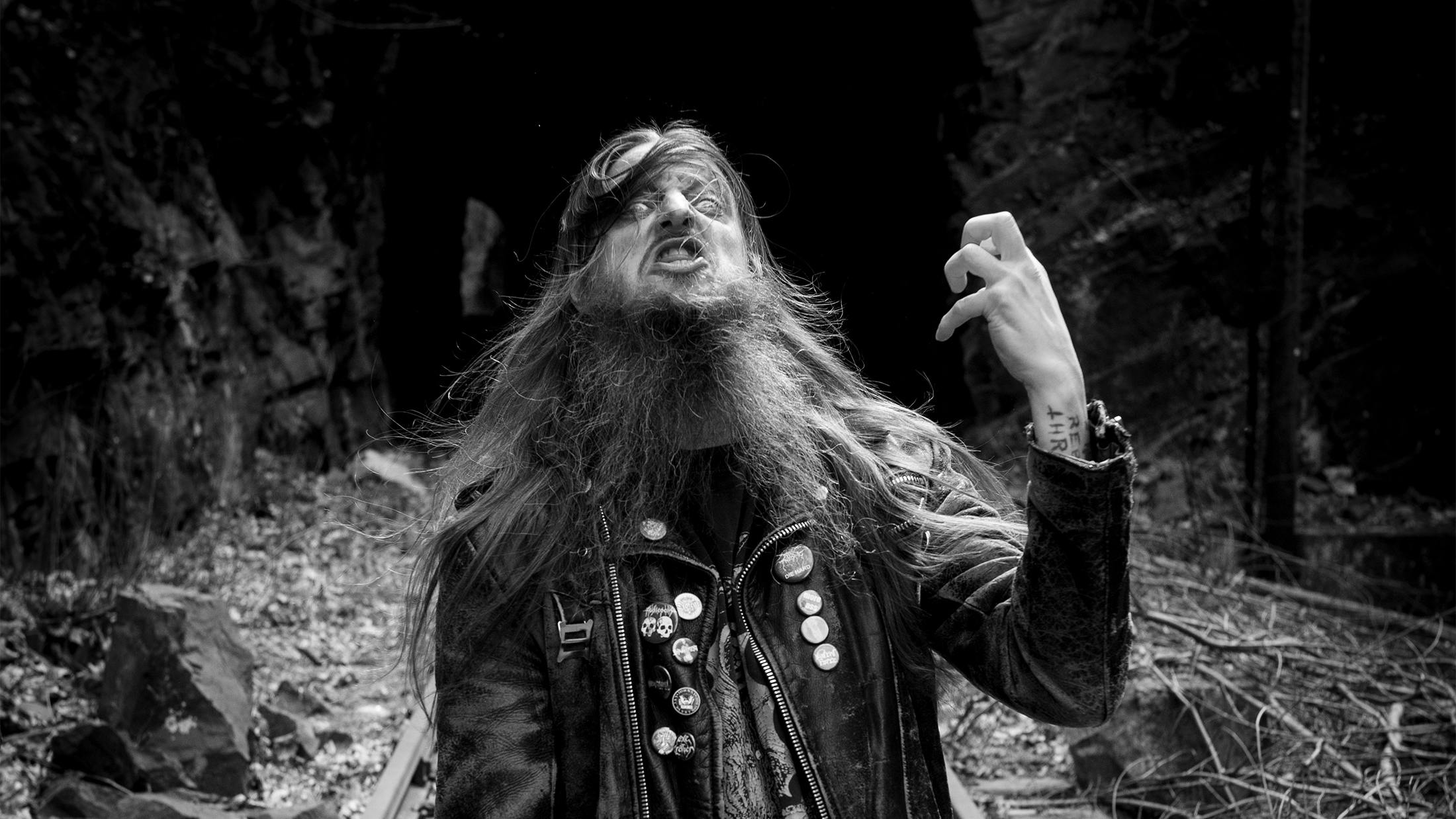
The jolly, friendly man born Ted Skjellum is actually celebrating his 54th birthday on the day that Kerrang! speaks to him. The thing that is in its late 30s is his tenure as the singer and guitarist with Norwegian black metal legends Darkthrone, which began in 1988. The real anniversary here, though is Darkthrone themselves. To celebrate their 40th year, Ted and drummer Fenriz (the band's two members since the departure of guitarist Ivar ‘Zephyrous’ Enger in 1993, and bassist Dag Nilsen in 1991), have overseen the release of a massive commemorative boxset, The Fist In The Face Of God.
Exploring 'the black metal years', and running from 1992's genre-defining second album A Blaze In The Northern Sky to 2004's Sardonic Wrath, the nine albums contained within are a chronicle of some of the finest works ever to bear the name Norwegian black metal. It also shows quite what a creative force Darkthrone are. The shift from the haunting death metal of their 1991 Soulside Journey debut (not included here) to …Blaze's raw, slashing black metal may have been profound and noticeable, but even as they became rawer and more primitive, colder and more atmospheric, each album stands as its own waymarker of just where Darkthrone were at any given time.
Mysterious, even by Norwegian black metal standards, the band's lack of involvement in the acts of their peers in the early ’90s – church arson, murder – in some way only added to the mystique of the music. Likewise with the fact that they stopped playing live very early on, to the extent that the boxset includes a video of their final live show in Oslo in 1996 (itself coming after a long gap).
As he celebrates his own birthday, Ted looks back on a life as Nocturno Culto, and the history of one of the most important bands ever, black metal or otherwise…
What was it like, growing up as a young rock and metal fan in Norway?
“It was kind of lonely. At school there was, like, one other guy into it. KISS was always popular, but when it came to metal, that was a bit more of a lonely affair as a kid, because people didn't understand the music. This was exactly the same mentality we had with Darkthrone as well, because we never considered Norway as some kind of an epicentre of interest in metal.”
How did you discover more dark, extreme stuff?
“I think it was in ’85 or something. There was something called Monsters Of Rock on Sky [TV], which was hosted by [legendary Kerrang! writer] Mick Wall. He played a live video for Hell Awaits by Slayer, and I couldn’t understand what the hell just happened. I had listened to Metallica and Black Sabbath and stuff like that, but Slayer was like this big train of sound just running over you. I sat there afterwards and thought, ‘What the hell happens now?’ I understood that my life would take a bit more of a sinister turn after that video. So, we can blame all of this on Slayer…”
You joined Darkthrone in 1988, a couple of years after they started. How did you find them, and what was it like meeting Fenriz for the first time?
“I had a band before that, with some of my cousins. But they didn't have the same kind of, I don't want to say ‘ambitions’, but I really wanted to play, and do something else once in a while apart from rehearse. So, when I got the opportunity to join them, someone I knew gave me a phone number for Fenriz. We talked on the phone for an hour, mainly about music – particularly Orion by Metallica. We arranged to meet at Kolbotn station, and I asked Fenriz how I would find him. He said he had this kind of bowl-cut, and at the back there was a rat tail hanging down, and some Palestinian scarf or whatever. It was not very hard to spot him, to say the least! In early May 1988 I went to see them play at a rock competition in a nearby county to decide if I wanted to join or not, and then I got into the band after that.”
What were you hoping to do as a band?
“It’s at least 80 per cent truth that when I joined and we started to make serious music, our one ambition was to record an album. That was it. We did three demos, and actually had offers from 10 or 11 places. We went with Peaceville, because they seemed the most serious, and they had signed Autopsy, who we liked. After we signed, they would send us test presses and advance tapes of Autopsy and stuff like that. I remember at one of our rehearsals getting the test press for the first My Dying Bride EP in the mail. So we were happy campers.”
Why did you go for the name Nocturno Culto?
“I am a person that starts to get alive after 11pm. I work really well in the night time – that’s when my mind is sharp. And I think the name has some Spanish origins, which is cool. But it’s basically because I like the night time.”
What was it like going to Sweden to record Soulside Journey at Sunlight Studios? You were very young lads still.
“That was great. I think we were 18, and we took the train from Oslo to Stockholm. The Entombed guys hosted us, and they were great because they had been in that studio and knew it a bit more well than we did. They came in a couple of times and helped out with some stuff. I remember I got the task of calling the studio to ask about stuff that we could bring with us, especially on the drum kit. I was nagging about having our own toms, and they said that was okay. But when I phoned one more time and asked about having our bass drums with us, that was a hard no!
“Ivar was late one day to studio. He had actually fallen asleep on the subway in Stockholm, which ran for 24 hours, so he was just sleeping all night on the train going back and forth! But we took it seriously, and it was a really proud moment. CDs were pretty new then, and I remember putting it in my CD player when it came out, and it said ‘Track 1’. I thought, ‘This is my track.’”
There a lot of difference between that album and A Blaze In The Northern Sky…
“I've been discussing this with Fenriz for the last five years. We understand why people think that's a big change, but for us in the band, the change wasn't that big, really. For us in Darkthrone at the time, we weren't really a death metal band from the beginning. I don’t want to get stuck in one track or whatever. We would just sit in the basement at Ivar’s place, having a good time, listening to things that we liked, like Bathory and Motörhead. Soulside Journey is basically a result of how we were teenagers, and we just wanted to be good at our instruments. The budget for Soulside Journey wasn't that big, so the only place we got a shot at was Sunlight Studios, and we got what we got.
“For A Blaze In The Northern Sky, and Under A Funeral Moon after, we wanted it to be cold. The sound was something we tried to plan as best as we could, because we didn't want to end up not having control over it. We did some research and tried stuff out at the rehearsal space, especially Ivar and me with the guitars. We wanted it to be cold, and luckily we got an engineer that was hired into that studio who was a real professional. Even though it's kind of extreme, I think that the guy really did a good job in all that chaos. He had never worked with stuff like this before, but he understood the basics, and he was a professional who understood the sound, so he managed to balance the madness somehow.
“I started doing a different type of vocals as well. On Soulside Journey, I was only doing death metal vocals, so I think Fenriz was really, really curious about how I was going to do the vocals this time. I wanted to be alone with the engineer in the studio to do it, and we had some candles and stuff. The other guys in the band left, but Fenriz was really slow out of the door. I could see him as I started recording, and he was like (nods in approval).”
The label were pretty surprised with the end result, right?
“Yeah, and no wonder! I can understand it from their point of view, listening to Kathaarian Life Code, the first song, and going, ‘What the hell is this? Are we supposed to promote this and sell this kind of shit?’ We had a little back and forth. They wanted us to remix everything, but we said, ‘No, this is how it's supposed to sound.’ There was a bit of arguing, but we got what we wanted, and I would say that after it had been out for a year I think they must have sold a lot of records, because it went kind of quiet. They didn't hassle us much after that!”
The visuals got really different as well. The albums started having stark, black and white covers, and you were wearing corpsepaint in the pictures. What was your inspiration for that?
“That's a good question. Really, it's difficult to answer. Bands before that had painted their faces, like King Diamond in Mercyful Fate, and Morbid from Sweden, but I think we used the corpsepaint for our own… let's call it ‘band rituals’. It's hard to explain.
“Actually, I remember very well the time that we decided not to use corpsepaint anymore. Ivar was coming to rehearsal one day in the middle of the summer, walking down the main street in Oslo, and he saw three guys coming towards him with corpsepaint, who were all sweating. When he told us that, we were kind of in shock. It had become kind of a commercial thing, and we decided, ‘Okay, no more!’”
This was when the Norwegian black metal scene was starting to become active. What was it like going into Euronymous’ shop, Helvete, and having somewhere like that as a record store and a place to meet?
“Yeah, people forget maybe that it was actually a functional record store. Euronymous had the whole floor of the shop that he rented, so it was a kind of a big record store with few records. We got to know people from other parts of Norway that were hanging around there, and it was good times, really. I remember a couple of months after A Blaze In The Northern Sky came out, I was walking in there, and these two guys were in there, with the album in their hands, listening to it on the speakers. One guy was looking at me in some kind of awe. He said to me, ‘Do you know what you have done?’ And I was like, ‘What have you done?’
“Something had happened, and I understood it was the album. We got that vision out, and I’m happy that it turned out to be that good. But it took a year at least before I did catch what kind of impact that album had, because we didn't read magazines or anything. But I realise now what we were part of, and luckily we brought something to the table.”
What do you remember about the attention and infamy black metal started gaining for the stuff people in the scene were doing?
“Well, I am born and raised in Oslo, and I moved away from Oslo in December ’91, before all those things happened, because I knew that something was going to happen. It was a bit more, let's say, serious times. Everybody was young and [into] crazy stuff. But I took the first opportunity I got to move out, and I moved far away from Oslo. When I saw all these things on the news, I wasn't surprised.”
How come?
“I could write a long book, which I'm not going to do, about having been there, and it's something I will take with me. I learned a lot about a lot of things. But it was a very sinister way to view things. It was almost like a competition of how to be most extreme. I think, for myself and Darkthrone, our interest was music, so for us, it was a bit strange. But, yeah, I moved from Oslo early on. I like peace and quiet.
“I think we always thought, ‘We don't need the personal attention.’ Our philosophy has always been to let the music do the talking. We are trying to push the music in front of us instead of all the other things, even playing live.”
There was always a real mystique around Darkthrone for stuff like that, being a bit more in the shadows. You quit playing live early on…
“We were eager in the earlier days to play live. I think we thought that this is what bands are supposed to do. But I noticed that Fenriz was getting more and more nervous about it, and he didn't like it. We did play some shows, though, in Norway, in Denmark, in Finland. The last show we did was at the Rockefeller Music Hall in Oslo in ’96. But I’m happy, because we can use all our energy on being creative, instead of seeing each other’s faces every day and playing live.”
There’s the big question at this point of what the live experience would be like as well. At Wacken in 2004, when you sang Darkthrone songs with Satyricon, there was a simple genius to just having flaming crosses onstage. But you’re like Bathory now – there’s so many ideas of what it could be, all right and wrong as well...
“Yeah. If we were to do it, it would take a year to figure out, get good musicians, there’s the question of how we should do it, which is very complicated. Sometimes my head is in a cartoon world, so I’ll think, ‘Okay, I imagine headlining Wacken, and we're going to give them some real evil.’ And by that, I mean the evil part is to only play [more death metal albums] Soulside Journey and Goatlord. That's pure evil! We’ve had plenty of great offers, and we’ve turned them all down. Really, you can come up with all kind of excuses and things, but the bottom line is that we don't want to play live. It's not for us.”
That suits an album like Transilvanian Hunger, though. And that in itself feels like a complete expression – it sounds really cold because it was done on a portable studio, the cover is a photocopy of a picture. But you stick it on, and you’re right there with it. It doesn’t need playing live to be understood, almost.
“Absolutely. That was the expression we wanted to have. Transilvanian Hunger was very appropriate album for its time. Things are a bit more… let’s call it sad. The cover picture was actually done for Under A Funeral Moon, and photocopied. It wouldn’t look the same if it was just the real picture. It's just a matter of making it a bit crappier. We used the same portable studio for [next album] Panzerfaust. I did the vocals on that album back at Fenriz’s place. It was a really warm summer day, and we were slightly drunk. I was screaming like there was no tomorrow, using my whole body. We looked out the window and there was somebody in the garden doing flowers.”
Do you regret the slogan that got put on the back of the first press of Transilvanian Hunger?
“I didn't do it. I was living in the forest. I had nothing to do with it. But it's stupid. I've been talking to Fenriz about it, and he said it's the dumbest thing he ever did, and he has been punishing himself ever since. It's a silly thing. It's stupid.”
The later albums in the boxset, particularly Plaguewielder, are a really great example of how Darkthrone have done different things over the years, but it all just sounds like Darkthrone…
“Thank you for saying that. I haven't listened to that album in about 20 years! I don't know how the standing is amongst people, but Plaguewielder and Ravishing Grimness were mostly my albums. Fenriz was a bit – how should I put it? – occupied at that time. We went to a place called Studio Studio, which was owned by a hard rock band from Norway called TNT. I remember Fenriz was very minimalistic. He had a small drum kit, one tom, one crash cymbal, and that was cracked. I saw this engineer walking past him several times, looking more and more strangely at him, and then actually said, ‘Are you really going to use that drum kit?’ And Fenriz was like, ‘Yeah.’ I guess that kind of suited those albums in the end, restricting himself on the drums.”
How do you feel about black metal’s legacy in Norway? Like punk in Britain, it’s gone from being this thing of outrage to something that’s noted now for its cultural significance.
“It can't really be ignored, the impact that some of the Norwegian bands have had abroad, you know? From 1990 to 2000, just to take a number, there was a lot of creativity, every band sounded different. And from the official Norway standpoint, you can't really ignore the impact that Norwegian metal has had in other countries.
“For us in all this, we said very early to our record company, Peaceville, that they are not allowed to send our albums into award things, because we don't want to be a part of it, because we don't see the point. That’s kind of our hardcore attitude. But we did get a recognition from The National Library in Oslo. They have this permanent exhibition that lasts for, like, 20 years. They had 300 people that decided 30 items that were going in this permanent exhibition that started in 2020 – I think the theme was Norwegian cultural export. There’s scrolls from the old kings and things, and then you have A Blaze In The Northern Sky representing the ’90s. So that’s cool.”
Black metal is a very different thing now to when that album came out. Bands can have big success, even the underground has the facility for touring, there’s full-on festivals for it, none of which existed back then. How connected do you still feel to it?
“I feel somehow connected. It’s always been a part of my life. Everything is slowly changing, but I feel a part of it anyway. It’s like, we are here, you know, and every the other band is there as well. We are just growing into old men, so someone else has to take over the ship. But for now, we’re still here.”
Darkthrone's The Fist In The Face Of God boxset is out now via Peaceville.
Read this next: